


Triathlon Cycling Shoes. Engineered for Transitions.
Cádomotus is a Dutch performance brand and the only company in the world that develops cycling shoes exclusively for triathlon. Every shoe starts with the demands that make triathlon unique: flying mounts, sockless riding, extreme heat, and a run that decides the result.
At the core is CarbonShell™ — a carbon monocoque sole technology developed over 25 years of engineering for elite speed skating, where athletes also perform barefoot inside a rigid carbon shell under extreme conditions. That same engineering now powers triathlon cycling shoes with measurably lower stack height, proven aerodynamic savings of 3–9 watts, and a platform designed to preserve your legs for the run.
We call this approach Transition Performance: optimizing not just the pedal stroke, but the entire sequence from T1 to T2 and beyond. It's a discipline most brands ignore. We built our company around it.
WHY CÁDOMOTUS?
Heat-moldable carbon — your foot, locked in
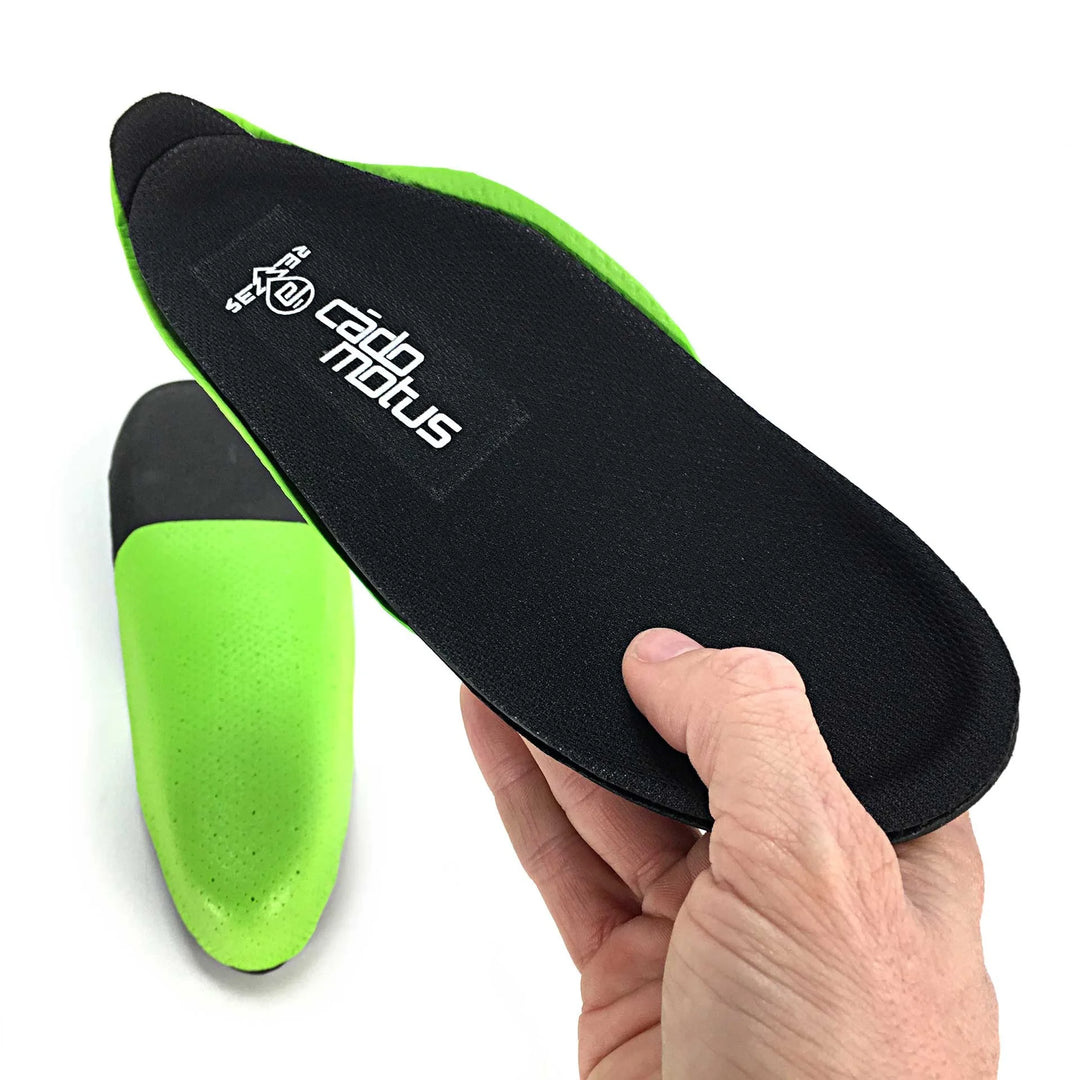
CarbonShell™ is the only triathlon shoe sole you can heat-mold at home. Ten minutes in the oven, and the carbon shell adapts permanently to your foot anatomy. The result: a fit so precise you fly out of T1 without even closing your shoes. The molded shell holds your foot in place from the first pedal stroke — no shifting, no hotspots, no fiddling with dials while the pack rides away.
→ How heat molding works
Cleaner airflow, fewer watts wasted
Wind tunnel testing at the Eddy Merckx Velodrome showed that open triathlon shoes — with their gaps, straps, and exposed foot — cost measurable watts in drag. A closed, smooth shoe surface reduces that. The savings are a few watts, not a revolution — but over 90 or 180 kilometres, every watt you don't waste is a watt you keep for the run.
→ See the test results
Lower stack height + full carbon support = fresher legs
A lower sole platform reduces calf strain during the bike leg. A rigid CarbonShell™ sole supports the entire foot, eliminating energy loss from flex in conventional shoes. The muscles you save are the muscles you need most for the run. This isn't marketing — it's biomechanics. → Read the science
Trusted at the highest level
2023 Ironman 70.3 World Champion Rico Bogen — fastest bike split in every T100 race he entered in 2025, and T100 San Francisco winner. Ironman Arizona champion Menno Koolhaas, who set the Dutch long-distance record at 7:28:52. Rio Olympian and two-time 70.3 World Championship silver medalist Ben Kanute, third in Arizona on the same day. Tokyo Olympian Justus Nieschlag, now racing the T100 circuit. And European Long Distance Champion Marlene de Boer, Dutch record holder. They all choose Cádomotus.



Race Day Preparation
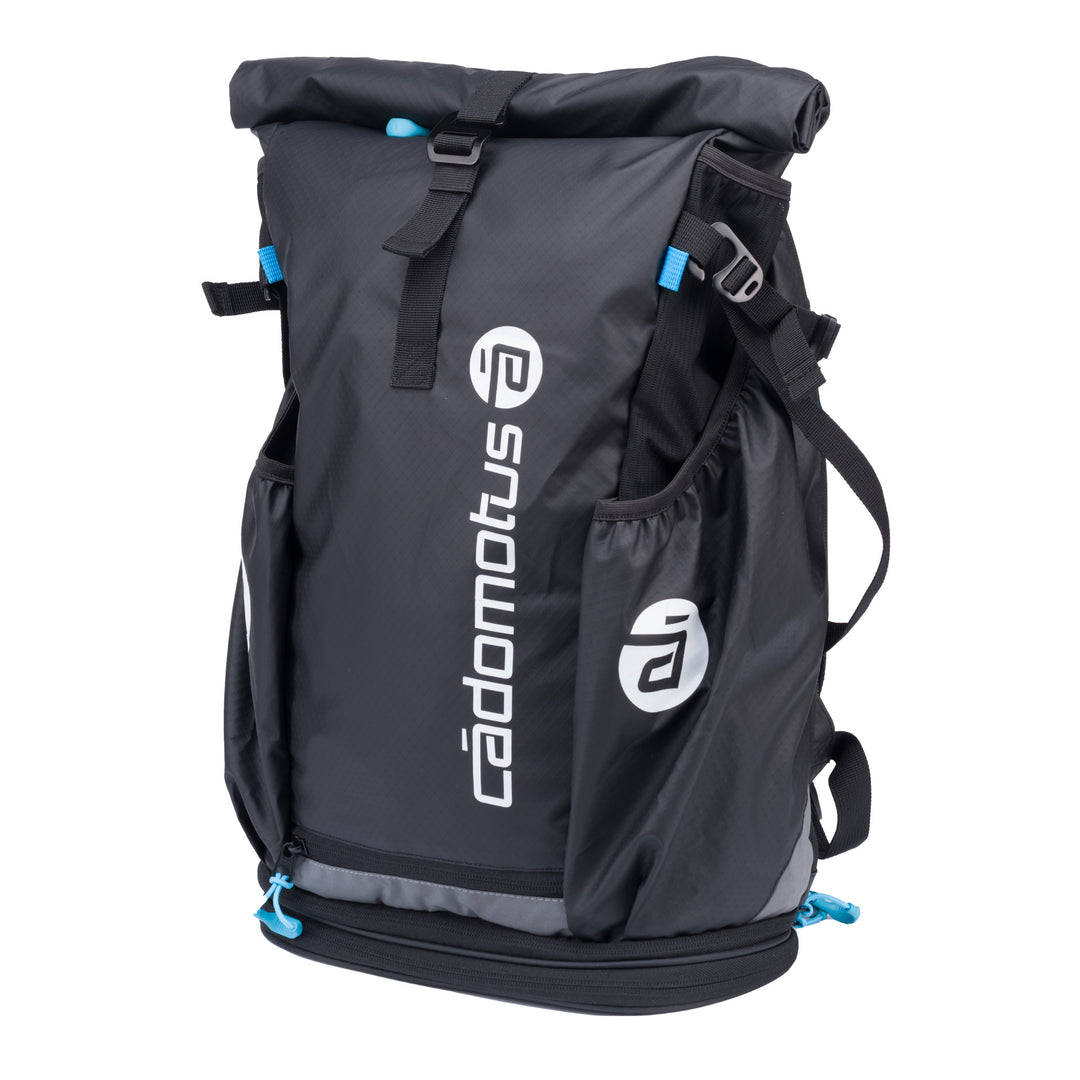
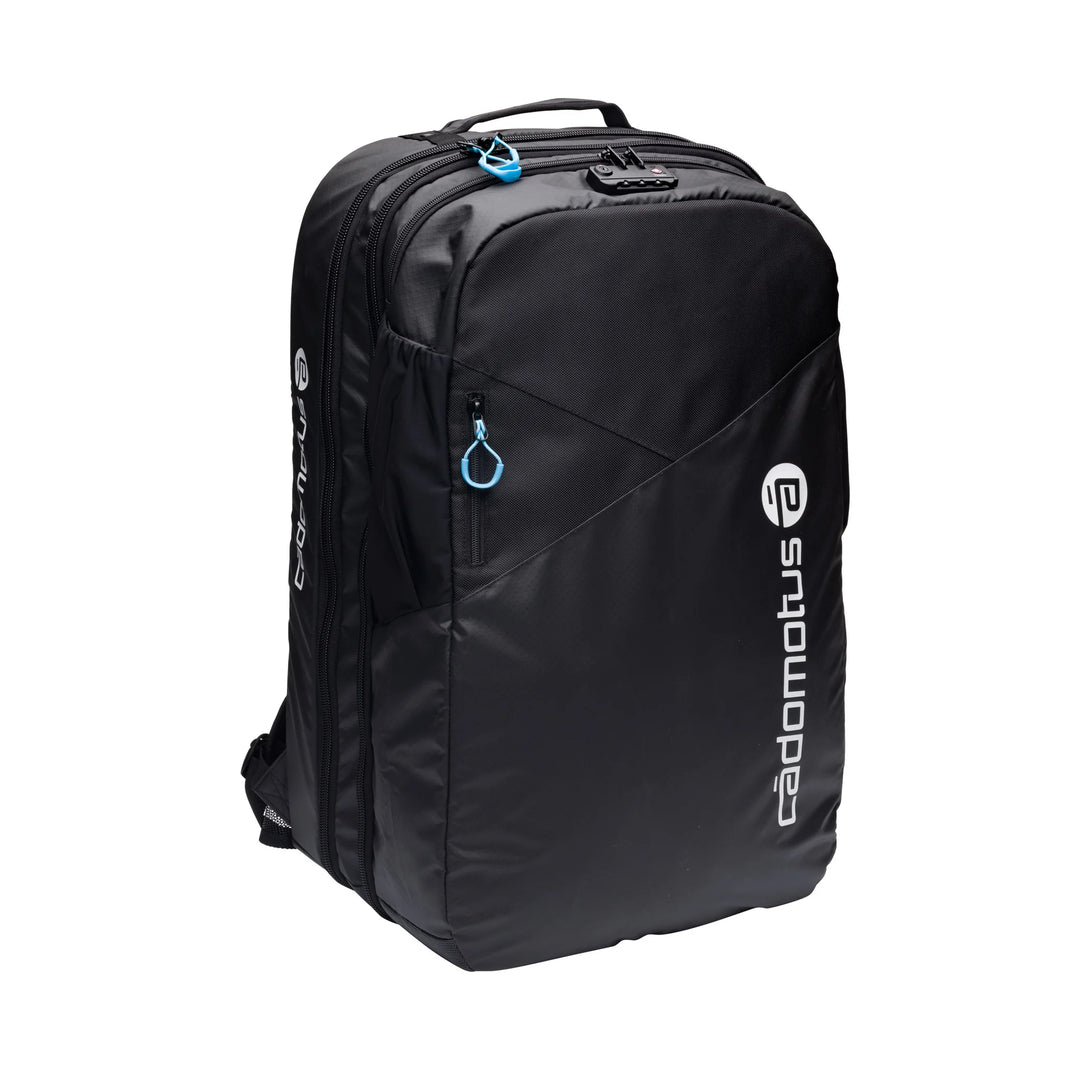
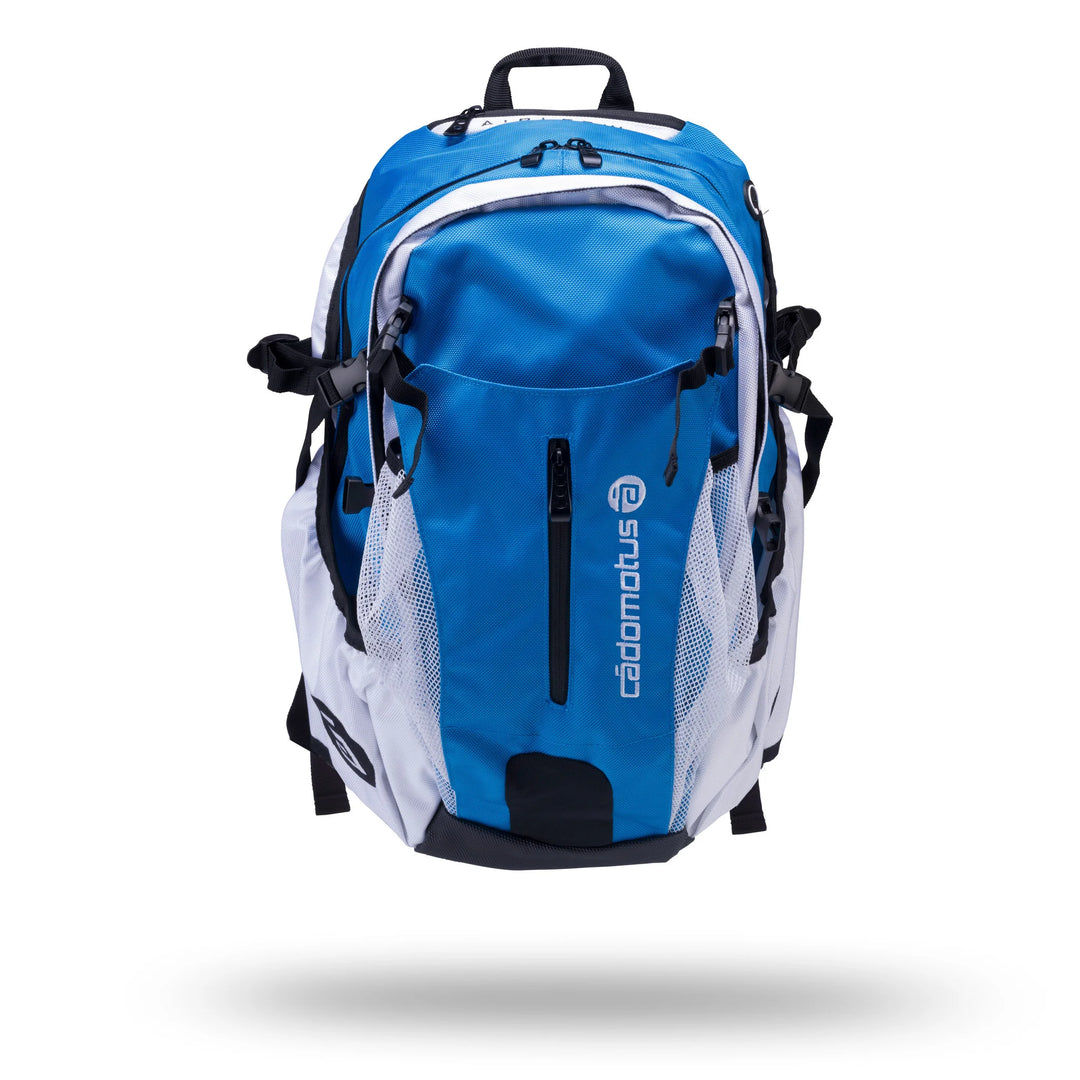
The fastest transitions start the night before. Cádomotus transition bags are preparation systems — separate compartments for swim, bike, and run gear, accessible in the order you need them. Clean setup, clear mind, faster execution.


Aero helmets
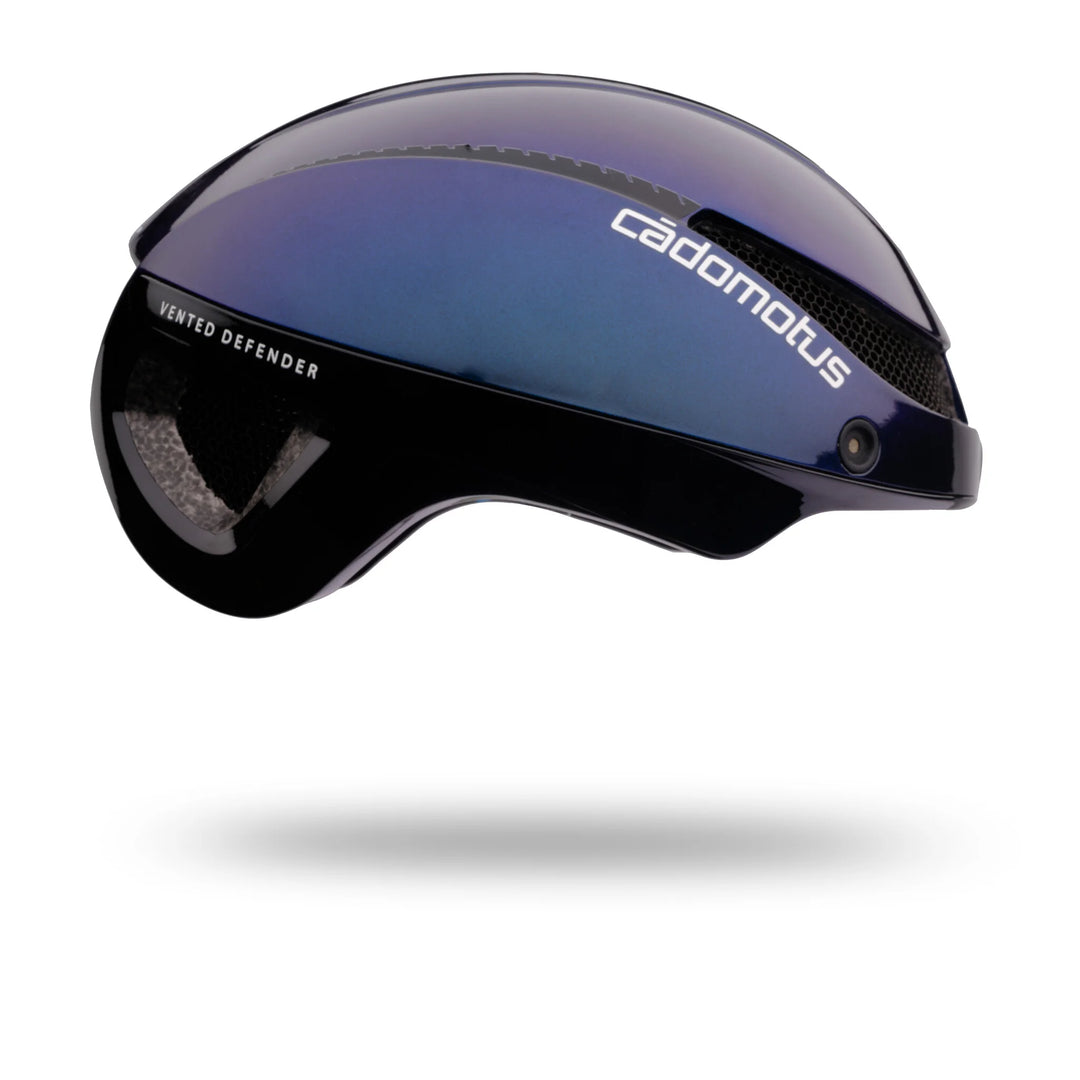
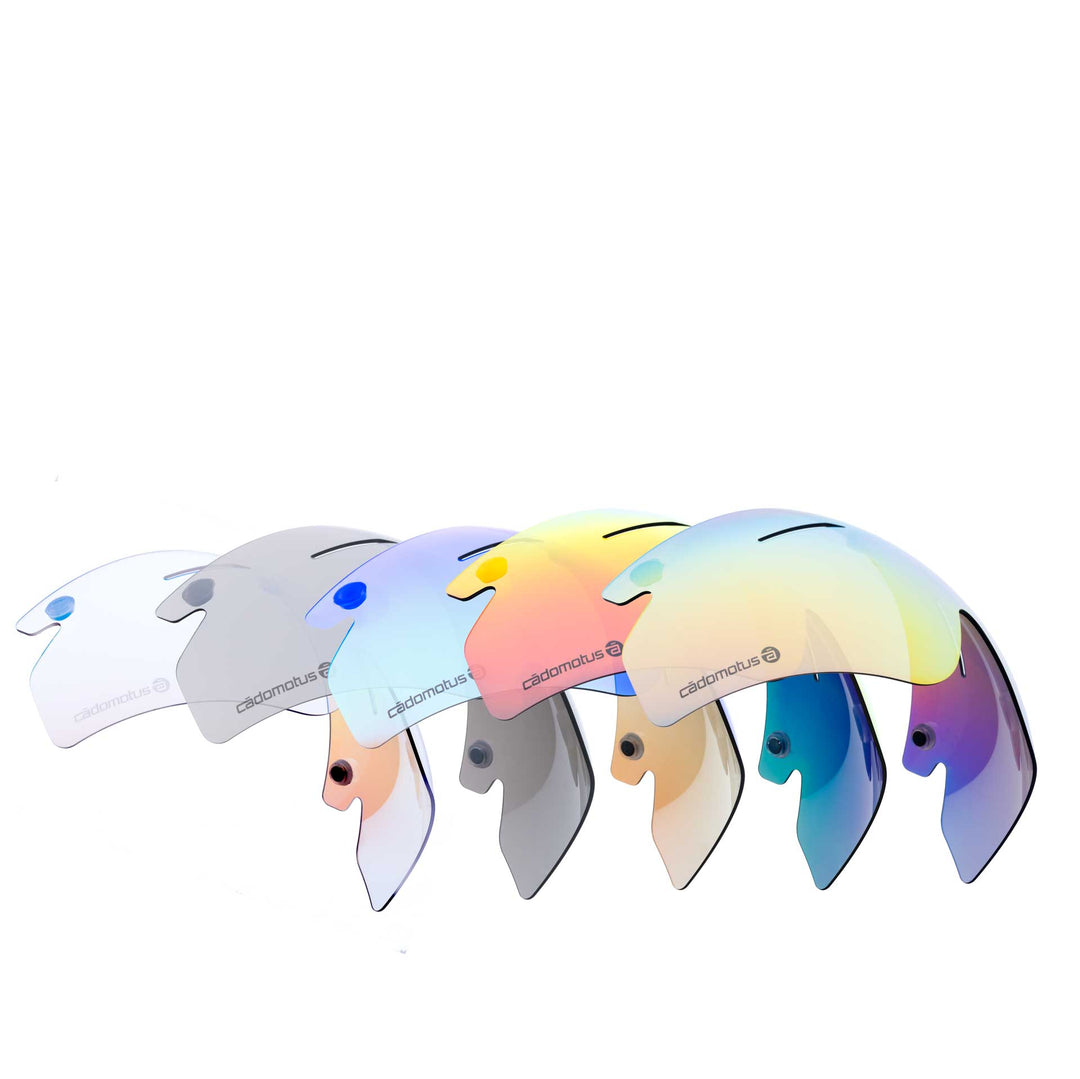
Magnetic Fidlock closure, snap-on visor, aero profiles for triathlon positions. The helmet doesn't define the discipline — the shoe does. But the right helmet contributes seconds when it matters most.



Our legacy forged of steel and ice
Cádomotus, pronounced "Kä-dō-Mō-tŭs", is named for the 'falling motion of the body,' reflecting its focus on high-speed, intelligent motion. Initially a speed skating company, Cádomotus is known for its innovative design engineering. Embodying the essence of skating, the company continuously innovates to push limits and enhance athletic performance, delivering top-tier solutions that improve outcomes in sports.





Let customers speak for us
I purchased a pair of the white triathlon shoes. The customer service was so amazing that I bought a helmet and travel bag as well. All the purchases are simply amazing. I have decided to purchase a second pair of shoes to wear for training rides.

I was very positively surprised by the high-quality finish — a stiff boot with an ankle that fits perfectly and gives great control and stability. It feels solid, professional, and clearly designed for performance.

Very good help before the deal.
Marjolein gave good advices and answered
always quick to all questions I had.
Shipping was good and helmet arrived
save! Helmet is perfect and looks nice.
Thanks a lot for good help and great helmet!
I register the new helmet for crash replacement, so in case of accident, Cadomotus will give discount for a new one. Thats very customer friendly!
Thanks a lot!

Bought this helmet two days before IM world championships. Crashed at 45mph/72kmh. My head was the first thing to make contact and that was with a boulder guardrail. At the hospital every scan came back perfect, not even a concussion. I’m writing this review 24 hours after the incident and can report my head isn’t even sore from impact. If I didn’t see my helmet afterwards I wouldn’t have even known I hit my head. To top it off, the helmet is very comfortable and very light. I am now a forever customer. Only wore the helmet for one ride, but without it that would have been my last!!

The lightest and quickest transition shoes I have ever worn

Today was my first new Cadomotus Omega helmet test ride. My opinion - comfortable, nice and really aero!
Bester Schuh, seht gute Verarbeitung und hohe Qualität - persönlicher Service und Anpassung

I met Diederick and his team at the Ironman Frankfurt expo and had a super friendly and helpful experience. I’ve always struggled to find cycling shoes that work for my feet – I have a bunion and prominent ankles that usually cause pressure points and pain in most shoes.
What really impressed me was that the shoes were custom-fitted on the spot. Just two days later, I was able to complete my very first full Ironman without any foot pain – which honestly felt like a small miracle.
The price is definitely on the premium side, but considering the quality, comfort, and personal support, it’s absolutely worth it.
Highly recommend – especially if you’ve had a hard time finding the right fit!
Die Passform ist gut. Das Tragegefühl ebenso. Ich habe diesen Schuh bei meiner letzten Langdistanz getragen und sie erfüllten ihren Zweck sehr gut. Meine Füsse fühlten sich nicht “platt” an als ich vom Rad stieg und auch während des Radfahrens hatte ich stets das Gefühl einen guten Kontakt über den Schuh zum Pedal aufs Rad zu haben. Ein- und Ausstieg funktionierten auch problemlos.
Ich kann diesen Schuh weiterempfehlen und werde ihn definitif noch bei meinen nächsten Triathlons einsetzen!
Der Radschuh trägt sich super angenehm, kein drücken oder scheuern. Zuerst dachte ich, er ist zu weit und hält nicht am Fuss. Aber nach paar Minuten gewöhnt man sich an dieses "Nicht spüren". Kein Vergleich zu meinem doch recht festen Lake. Denke für die Triathlon Langdistanz der perfekte Radschuh :)
Great helmet, fast and incredibly comfortable. It is unbelievable that a cycling helmet can be this comfy.
Ich habe den Chronos Aero nun seit über einem Jahr im Einsatz und kann ein durchweg positives Fazit ziehen.
Das glatte Obermaterial wirkt super clean - was den Schuh nicht nur richtig schnell aussehen lässt, sondern ihn auch wirklich schnell macht.
Die ultra steife Carbonsohle sorgt für optimale Kraftübertragung ohne Verluste.
Für den Triathlon-Einsatz ist der Chronos Aero gut durchdacht. Der Einstieg ist weit, eine Lasche zum Befestigen mittels Gummiband ist auch gegeben. So verliert man beim Wechsel keine wertvolle Zeit. Der Boa-Verschluss sorgt optimalen Halt!
In Kombination mit dem Heatmolding Verfahren, schmiegt er sich wie eine zweite Haut an den Fuß an.
Der Schuh kann auch barfuß getragen werden. Das Innenmaterial ist angenehm und scheuert nicht.
Ik ben echt ontzettend blij met deze triathlonschoenen! Ze zitten vanaf het eerste moment super comfortabel — ik heb nog geen schoenen gehad die zo fijn aanvoelen, zelfs als je flink aan het pushen bent. Naast het comfort zijn ook de looks top: clean en aero, precies wat je wilt in een triathlonschoen.
I've been looking for a new triathlon cycling shoe since the many pairs of S-Works Trivent shoes I've been using since 2017 were no longer available. After a long search and many failed orders, I came across these Worldcup 4E Triathlon-(Sprint-) shoes, and I have to say I'm delighted. It was important to me that I could also wear the shoe indoors on hot days, that it was well ventilated and could be worn with or without socks. I found everything, and also a great shoe design in this model from Cadomotus. However, before buying, I would advise everyone to take the size chart not as a comparison with the foot measurement, but as the inside measurement of the shoe. With a foot length of 282mm, I am a size 45 (291mm) according to the table for the Worldcup 4E. However, the shoe is too small and pinches and rubs on the toes. In size 46 (298mm) it is perfect. I would like to mention this for anyone whose instep is higher. For people with rather flat feet, however, the table could be helpful and accurate.
J'étais à la recherche d'une nouvelle chaussure de vélo de triathlon depuis que mes paires de S-Works Trivent, qui ne sont plus disponibles, ont fait leur temps depuis 2017. Après une longue recherche et de nombreuses erreurs de commande, je suis tombé sur celle-ci Worldcup 4E Triathlon-(Sprint), et je dois dire que je suis ravi. Ce qui était important pour moi, c'était de pouvoir utiliser la chaussure en intérieur lorsqu'il fait chaud, qu'elle soit bien ventilée et qu'elle puisse être portée avec ou sans chaussettes. J'ai trouvé tout cela, et un super design de chaussure dans ce modèle de Cadomotus. Toutefois, avant l'achat, je voudrais conseiller à tous de ne pas considérer le tableau des tailles comme une comparaison avec la mesure du pied, mais comme la mesure intérieure de la chaussure. Avec une longueur de pied de 282 mm, le tableau de la Worldcup 4E indique que je suis en taille 45 (291 mm). La chaussure est donc trop petite et exerce une pression et un frottement sur les orteils. En taille 46 (298mm), elle est parfaite. Je tiens à le préciser pour tous ceux dont le cou-de-pied est plus haut. Pour les personnes ayant des pieds plutôt plats, le tableau pourrait toutefois être utile et précis.
Ich war seitdem meine seit 2017 genutzten Paare des nicht mehr erhältlichen S-Works Trivent ausgedient haben auf der Suche nach einem neuen Triathlonradschuh. Nach längerem Suchen und vielen Fehlbestellungen bin ich auf den gestoßen, und muss sagen, ich bin begeistert. Wichtig war mir, dass ich den Schuh auch indoor an heißen Tagen beim Zwiften, dass er also gut ventiliert ist und sowohl mit als auch ohne Socken tragbar ist. Alles und noch ein super Design des Schuhs habe ich in diesem Modell von Cadomotus gefunden. Allerdings möchte ich allen vor dem Kauf dazu raten, die Größentabelle nicht als Abgleich mit dem Fußmaß, sondern als Innenmaß des Schuhs zu verstehen. Bei einer Fußlänge von 282mm liege ich laut Tabelle zum Worldcup 4E bei Größe 45 (291mm). Der Schuh ist demnach allerdings zu klein und drückt und reibt an den Zehen. In der Größe 46 (298mm) ist er perfekt. Ich möchte dies erwähne, für alle, deren Spann etwa höher ist. Bei Menschen mit eher flachen Füßen könnte die Tabelle aber hilfreich und präzise sein.